
Professional Hairstyles
Discover the best men's professional hairstyles for corporate, executive, and business environments. Explore classic side parts, executive contours, clean tapers, modern pompadours, and low-shine styling tips to project leadership and polish.
All Posts on Professional Hairstyles


Low Taper Fade for Interviews: A Professional Haircut That Makes a Great First Impression
Walking into an interview, your appearance gets read before you say a single word. Interviewers form impressions quickly...
Read More about Low Taper Fade for Interviews: A Professional Haircut That Makes a Great First Impression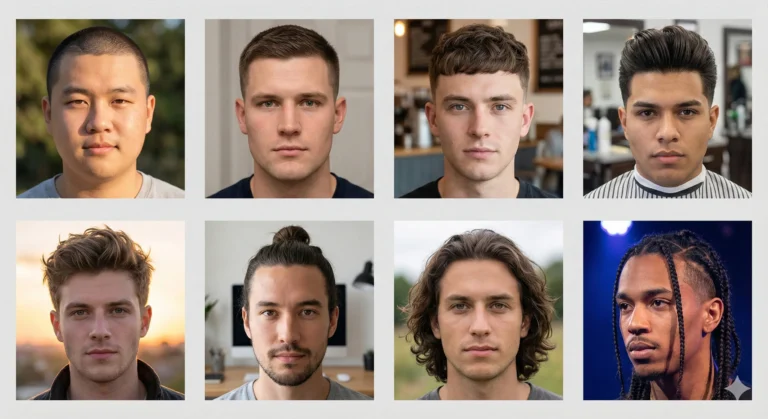
Haircuts & Styles: A Simple Guide for Men (With Face Shapes + Hair Types)
A good men's haircut can improve your appearance. If the style matches your face and routine, you look better. This guid...
Read More about Haircuts & Styles: A Simple Guide for Men (With Face Shapes + Hair Types)Men's Professional Hairstyles Guide: Executive Cuts & Workplace Style
In high-stakes corporate boardrooms, legal firms, investment banks, and executive environments, your haircut is an integral component of your professional visual brand. A sophisticated, professional hairstyle communicates competence, discipline, attention to detail, and leadership credibility. Professional men's hairstyles favor classic structural balance, refined scissor work, and clean perimeters over extreme, high-contrast fashion trends. Whether you opt for a timeless Ivy League side part, a tailored executive contour, a neat low taper fade, or a textured modern comb over, mastering professional hairstyles requires selecting a cut that flatters your bone structure and pairs seamlessly with business tailoring.
Historical Evolution and Cultural Context
The standards of corporate executive hairstyles evolved through mid-20th-century business culture. The 'Mad Men' era of the 1950s and 1960s established the clean, side-parted pomade style as the universal corporate uniform. As modern workplaces have modernized, professional hairstyling has embraced natural matte textures, softer scissor tapers, and low-shine pastes, allowing modern executives to project authority with contemporary elegance.
Key Styles, Cut Anatomy, and Variations
Top professional hairstyles for corporate settings:
- The Executive Contour / Side Part: The undisputed corporate standard, featuring a clean part along the parietal ridge with tapered sides.
- The Classic Scissor Taper: Completely cut with shears, preserving soft, natural perimeter length around the ears and neck.
- The Professional Textured Comb Over: Features 2 to 3 inches on top brushed neatly across with subtle texture and a low taper.
- The Modern Ivy League: A refined short cut that can be brushed up into a short quiff or parted neatly to the side.
Face Shape and Hair Texture Compatibility Matrix
Selecting the optimal haircut requires understanding how hair density, curl pattern, and cranial bone structure interact:
| Professional Style | Top Length | Side / Back Finish | Recommended Styling Product |
|---|---|---|---|
| Executive Contour | 2.5 3.5 inches | Low Taper / #2 Guard | Low-shine water-based pomade |
| Classic Scissor Taper | 2 3 inches | All-scissor taper | Styling cream or matte paste |
| Modern Ivy League | 1 1.5 inches | #1.5 to #2 Taper | Matte styling clay |
Step-by-Step Styling and Barber Execution Protocol
Follow this sequential framework to achieve salon-quality styling and structural hold at home:
- Locate Your Natural Part: Comb wet hair straight back; observe where it naturally splits to find your ideal part line.
- Blow-Dry for Clean Direction: Direct airflow along the part line with a vented brush to set the structured side sweep.
- Apply Low-Shine Product: Work a nickel-sized amount of water-based pomade or styling paste through the hair.
- Comb with Precision: Use a fine-tooth comb to create clean, razor-sharp part lines and smooth down the sides.
Essential Products, Formulations, and Styling Tools
Mastering hair texture requires the proper combination of pre-stylers, finishing clays, and professional tools:
Requires hand-cut cellulose acetate combs, water-based pomades, and ionic blow dryers.
Professional Barbershop Secrets and Edge Precision
Incorporate these master barber techniques to maintain clean contours and sharp graduation between appointments:
To keep a side part looking professional all day without stiffness, use a water-based pomade combined with a quick mist of flexible hairspray along the part line.
Common Haircut Mistakes and How to Avoid Them
Avoid these frequent styling pitfalls that compromise hair health and visual balance:
- Using High-Gloss, Greasy Pomades: Excessive shine looks dated and wet under harsh office fluorescent lighting.
- Letting Necklines Get Fuzzy: An untrimmed neckline undermines an expensive bespoke suit.
Seasonal Care and Maintenance Cadences
Environmental fluctuations impact hair cuticle hydration and scalp sebum production. Adapt your regimen across seasons:
Maintain consistent 3-to-4-week barber appointments year-round to preserve crisp executive proportions.
Barbershop Communication, Terminology, and Consultation Guide for Professional Hairstyles
Achieving your ideal haircut requires clear, precise communication with your master barber. Never rely solely on generic names like 'short back and sides' or 'medium fade,' as barber interpretations vary widely. When requesting professional hairstyles, specify exact guard numbers (e.g., '#1 closed tapering into a #2 on the temples'), define your preferred neckline finish (tapered vs. squared vs. rounded), state whether you want scissor texture or point-cutting on top, and bring two or three high-resolution reference photographs displaying the front, side profile, and back angles. An expert barber will assess your hair growth whorls, cowlicks, temporal recession, and skull geometry to customize the perimeter boundaries to your unique anatomy.
Blow-Drying Mechanics, Directional Airflow, and Pre-Styling Chemistry
Eighty percent of any great hairstyles volume, texture, and structural direction is established during the initial blow-dry rather than by finishing products alone. Apply a heat-activated pre-stylersuch as a mineral sea salt spray or lightweight grooming tonicto clean, towel-damp hair. Use a vented tunnel brush or round boar-bristle brush while blow-drying on medium heat, directing the airflow from roots to tips in the natural direction of desired hair flow. Maintain the dryer nozzle at a 45-degree angle approximately three inches from the hair to avoid scorching the keratin cuticle. Conclude the blow-dry with a 10-second blast of cold air (the 'cool shot' button) to contract the cuticle layer, lock the volume in place, and impart natural shine.
Scalp Health, Follicular Longevity, and Trimming Schedules
Healthy, vibrant hair requires an optimal scalp environment. The human scalp contains over 100,000 hair follicles that produce natural protective sebum. To prevent sebum buildup, follicular inflammation, and fungal flaking (Malassezia), wash your hair two to three times weekly with a sulfate-free botanical cleanser, massaging the scalp with circular fingertip pressure to stimulate microvascular perfusion. Schedule precision maintenance trims according to your style's requirements: short fades and precision line-ups require touch-ups every two weeks, classic crew cuts and tapers every three to four weeks, and medium-to-long textured flow styles every six to eight weeks to eliminate split ends and maintain clean geometric proportions.
Barbershop Communication, Terminology, and Consultation Guide for Professional Hairstyles
Achieving your ideal haircut requires clear, precise communication with your master barber. Never rely solely on generic names like 'short back and sides' or 'medium fade,' as barber interpretations vary widely. When requesting professional hairstyles, specify exact guard numbers (e.g., '#1 closed tapering into a #2 on the temples'), define your preferred neckline finish (tapered vs. squared vs. rounded), state whether you want scissor texture or point-cutting on top, and bring two or three high-resolution reference photographs displaying the front, side profile, and back angles. An expert barber will assess your hair growth whorls, cowlicks, temporal recession, and skull geometry to customize the perimeter boundaries to your unique anatomy.
Blow-Drying Mechanics, Directional Airflow, and Pre-Styling Chemistry
Eighty percent of any great hairstyles volume, texture, and structural direction is established during the initial blow-dry rather than by finishing products alone. Apply a heat-activated pre-stylersuch as a mineral sea salt spray or lightweight grooming tonicto clean, towel-damp hair. Use a vented tunnel brush or round boar-bristle brush while blow-drying on medium heat, directing the airflow from roots to tips in the natural direction of desired hair flow. Maintain the dryer nozzle at a 45-degree angle approximately three inches from the hair to avoid scorching the keratin cuticle. Conclude the blow-dry with a 10-second blast of cold air (the 'cool shot' button) to contract the cuticle layer, lock the volume in place, and impart natural shine.
Scalp Health, Follicular Longevity, and Trimming Schedules
Healthy, vibrant hair requires an optimal scalp environment. The human scalp contains over 100,000 hair follicles that produce natural protective sebum. To prevent sebum buildup, follicular inflammation, and fungal flaking (Malassezia), wash your hair two to three times weekly with a sulfate-free botanical cleanser, massaging the scalp with circular fingertip pressure to stimulate microvascular perfusion. Schedule precision maintenance trims according to your style's requirements: short fades and precision line-ups require touch-ups every two weeks, classic crew cuts and tapers every three to four weeks, and medium-to-long textured flow styles every six to eight weeks to eliminate split ends and maintain clean geometric proportions.
Summary and Personal Aesthetic Philosophy
Your hairstyle is the primary architectural frame of your face and the most visible expression of your personal aesthetic. By understanding your facial geometry, selecting the proper cut, investing in quality styling products, and maintaining regular barber appointments, you project an enduring aura of confidence, grooming discipline, and effortless style.
Frequently Asked Questions
Got questions? We've got answers. Explore our most asked questions about professional hairstyles.
The classic side part (executive contour), the classic scissor taper, and the Ivy League crew cut are the top professional haircuts for business settings.
Yes. Low taper fades and conservative mid fades are widely accepted in modern business environments when paired with a neat, combed top.
A matte styling paste or low-shine water-based pomade provides clean hold and a natural look without looking greasy under office lighting.
Comb your damp hair straight back from the forehead and gently push forward with your palm; the hair will naturally split along your true part line.
Visit your barber every 3 to 4 weeks to keep the side tapers neat, the neckline crisp, and the top length in perfect executive proportion.
Yes, by keeping long hair neatly groomed, washed, and tied into a clean low bun or sleek ponytail for meetings and corporate presentations.