
Beard Styles by Face Shape
Find the best beard style for your face shape with our comprehensive guide. Learn how to balance facial proportions, sculpt jawlines, and enhance your features whether you have a round, square, oval, oblong, diamond, or heart-shaped face.
All Posts on Beard Styles by Face Shape
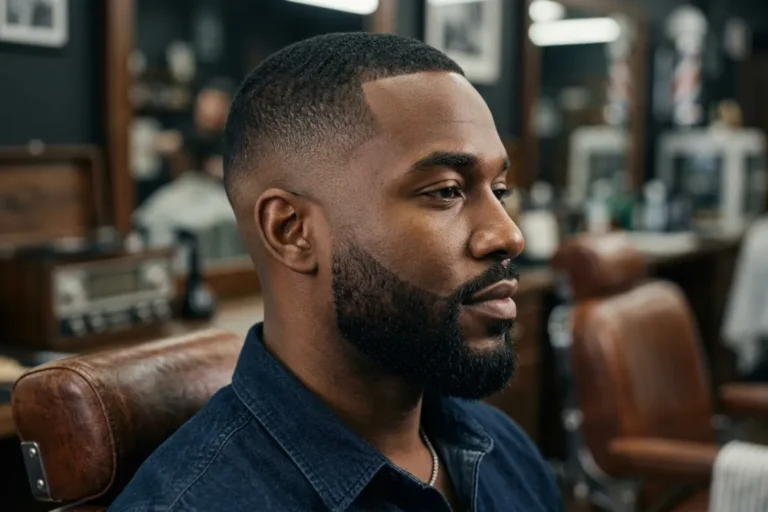

Low Taper Fade with Goatee: The Complete Style Guide for Men
You know that feeling after a fresh low taper fades? Clean sides, sharp edges, everything looks right. Then you get home...
Read More about Low Taper Fade with Goatee: The Complete Style Guide for MenBeard Styles by Face Shape: The Definitive Matching Guide
Selecting an exceptional beard style is a masterclass in facial geometry and optical proportion. Facial hair does not exist in isolation; it functions as an organic contouring tool capable of reshaping your jawline, slimming wide cheeks, softening aggressive angles, or adding masculine length to a compact face. When chosen with precision, a beard creates the visual illusion of a perfectly proportioned oval facethe aesthetic gold standard in portraiture and grooming. Conversely, an incompatible beard style can exaggerate undesirable features, making round faces appear wider or long faces look excessively narrow. This comprehensive guide breaks down facial shape identification, geometric proportion principles, and tailored styling strategies for every male facial architecture.
Historical Evolution and Cultural Context
The concept of tailoring facial hair to facial structure traces back to classical antiquity. Classical Greek sculptors and Roman barbers recognized that beard contours could dramatically alter perceived facial harmony, recommending rounded beards for sharp jawlines and pointed chin beards for broader faces. In the nineteenth century, Victorian grooming manuals published detailed geometric diagrams illustrating how sideburns, mutton chops, and goatees could correct perceived facial asymmetries. In contemporary barbering, master stylists utilize advanced tapering, fading, and graduation techniques to sculpt bespoke beard silhouettes engineered specifically for each client's bone structure.
Anatomy, Key Classifications, and Variations
Understanding the core facial geometry archetypes enables you to select styles that optimize your facial symmetry:
- Round Face Geometry: Characterized by equal width and length with soft cheek contours. Requires angular, vertical styles with tapered sides and chin volume (such as the Ducktail, Van Dyke, or Faded Corporate Beard) to elongate the profile.
- Square Face Geometry: Defined by a prominent, wide jawline and broad forehead. Benefits from rounded, softly sculpted beards or heavy designer stubble that softens harsh mandibular angles without losing definition.
- Oblong / Rectangular Face Geometry: Marked by a long vertical axis with straight sides. Requires fuller cheek growth and shorter chin length (such as full boxed beards or heavy stubble) to add lateral width and prevent excessive facial elongation.
- Oval Face Geometry: The naturally balanced archetype with gently curved jawlines and balanced proportions. Highly versatile, accommodating virtually any style from corporate beards to full lumberjack aesthetics.
- Diamond and Heart Face Geometries: Characterized by wide cheekbones and narrow, pointed chins. Requires fuller boxed beards and rounded chin coverage to build volume along the lower third of the face.
Optical Illusions: Enhancing Facial Proportions
Barbers utilize visual shading to alter perceived facial bone structure. Darker, denser hair draws visual weight, while faded or shaved areas recede. If you have a weak chin, allowing extra length and density at the chin center creates the visual projection of a prominent jaw. If your cheeks are full or fleshy, sharp diagonal cheeklines carved at a 45-degree angle create the illusion of high, sculpted cheekbones.
Proportions and Compatibility Matrix
Achieving visual harmony requires tailoring your style to your anatomical features. Consider this comprehensive compatibility guide:
| Face Shape | Key Facial Characteristics | Optimal Beard Styles | Styles to Strictly Avoid |
|---|---|---|---|
| Round | Soft jaw, equal width/length, full cheeks | Ducktail, Goatee, Faded Beard, Balbo | Mutton chops, bushy wide cheeks |
| Square | Broad forehead, sharp wide jawline | Rounded Goatee, Designer Stubble, Circle Beard | Sharp boxy chin trims, right-angled borders |
| Oblong | Long vertical plane, narrow jaw | Full Sides Beard, Heavy Stubble, Mutton Chops | Pointed long beards, chin-heavy goatees |
| Oval | Balanced proportions, slightly curved jaw | Corporate Beard, Full Beard, Short Boxed | Excessively asymmetric or disproportionate cuts |
| Heart / Diamond | Wide cheekbones/forehead, narrow pointed chin | Full Boxed Beard, Classic Beard, Extended Goatee | Pointed goatee styles that sharpen the chin |
Step-by-Step Styling and Execution Protocol
Follow this professional sequential framework to achieve immaculate results with symmetry and structural precision:
- Measure Your Facial Architecture: Stand before a mirror and measure four key dimensions: forehead width, cheekbone width, jawline width (from ear to chin tip), and vertical facial length (from hairline to chin).
- Determine Your Face Shape: Compare your measurements to categorize your bone structure as round, square, oblong, oval, heart, or diamond.
- Define the Strategic Goal: Establish whether your face requires vertical elongation (round/square faces) or lateral widening (oblong/narrow faces).
- Set Guard Lengths Accordingly: For round faces, use a shorter guard (3mm-5mm) on the cheeks and a longer guard (10mm-15mm) on the chin. For oblong faces, maintain uniform length or fuller sides.
- Sculpt Precise Necklines and Cheeklines: Carve sharp cheeklines for round faces to add definition, or softer, natural cheeklines for angular square faces.
- Maintain Symmetrical Balance: Inspect your profile in a multi-angle mirror, trimming stray whiskers to preserve clean geometry.
Barbershop Graduation Techniques
When blending lengths across different zones of your face, utilize clipper-over-comb graduation. Hold a flat barber comb at an angle against the cheekbone, tilting the teeth slightly outward at the top, and run the clipper across the comb surface. This creates a seamless, graduated taper that contours the face without harsh demarcation lines.
Material Science, Essential Ingredients, and Tooling
Mastering quality requires understanding the physical formulations, textiles, or grooming tools that deliver peak performance:
Sculpting face-shape-specific beards requires high-precision grooming instruments:
- Adjustable Beard Trimmers: Clippers with 0.5mm micro-step adjustments allow seamless blending and tapering between cheek and chin lengths.
- Clear Shave Gels: Non-foaming shave gels provide transparent visibility, enabling surgical accuracy when carving custom cheeklines and neck curves.
- Beard Shaping Templates: Ergonomic acrylic guides assist in etching perfectly symmetrical curved or straight lines along the jaw and neck.
- Boar-Bristle Styling Brushes: Help align whiskers into intended geometric shapes before making scissor cuts.
Professional Industry Secrets and Maintenance Schedules
Implement these salon and barbershop techniques to maintain peak presentation between professional appointments:
Master barbers utilize optical graduation techniques to reshape facial appearance. Fading the sideburns down to skin level visually separates the haircut from the beard, immediately slimming the cheeks and drawing visual focus downward to the chin. Furthermore, maintaining a darker, denser mustache draws attention to the center of the face, balancing wide cheekbones and softening aggressive jaw angles.
Common Styling Mistakes and Expert Solutions
Avoid these frequent pitfalls that detract from your appearance:
- Ignoring Facial Proportions: Blindly copying a celebrity's beard style without assessing whether their face shape matches yours.
- Adding Length to a Long Face: Growing an elongated pointed beard on an already oblong face creates an exaggerated, unbalanced silhouette.
- Widening a Round Face: Allowing full, bushy growth on the cheeks makes a round face appear significantly heavier.
- Over-Squaring a Square Jaw: Trimming sharp 90-degree corners on a square jaw creates an unnatural, blocky appearance.
Seasonal Adaptations and Longevity Care
Environmental conditions require tailored adjustments to ensure durability, comfort, and protection:
In winter, men with long faces can embrace fuller cheek growth for added warmth and lateral width. In summer, men with round or square faces can transition to tapered skin-fade beards to stay cool while preserving crisp jawline definition.
Professional Barbershop Consultation and Diagnostic Guide
When consulting with a master barber regarding beard styles by face shape, clear communication of your personal aesthetic goals and lifestyle constraints is paramount. Bring reference photographs that showcase the specific silhouette, density, and neckline placement you desire. A professional barber assesses the natural density distribution of your facial follicles, checks for growth whorls or cowlicks near the chin, and identifies any asymmetric bone structure. They will recommend subtle adjustments to guard lengths and graduation angles to tailor the style to your exact facial geometry, ensuring your daily styling routine remains quick, effortless, and effective.
Advanced Product Chemistry and Ingredient Efficacy
Selecting the right grooming formulations requires an understanding of how cosmetic ingredients interact with the stratum corneum and facial hair cuticles. Natural plant-derived carrier oilssuch as golden jojoba oil, Moroccan argan oil, and cold-pressed sweet almond oilcontain high concentrations of essential oleic and linoleic fatty acids that penetrate deep into the dermal matrix. Unlike synthetic mineral oils or petroleum derivatives that create an occlusive film over pores, plant-based lipids integrate seamlessly with human sebum, providing breathable hydration that prevents follicle clogging, soothes inflammation, and strengthens hair tensile strength against brittle breakage.
Tool Maintenance, Hygiene, and Blade Sterilization
The longevity and precision of your grooming tools directly influence the health of your facial hair and skin. Clipper and trimmer blades accumulate microscopic hair fragments, dried skin cells, and microbial flora with every use. Implement a strict sanitization protocol: brush out trapped debris after each grooming session, spray the cutting heads with an antibacterial and antiviral blade disinfectant, and apply two drops of lubricating mineral clipper oil across the teeth to prevent friction heat and blade dulling. Store wooden brushes and acetate combs in a well-ventilated, dry environment to preserve bristle integrity and prevent bacterial growth.
Summary and Personal Aesthetic Philosophy
True personal style is an authentic reflection of discipline, self-knowledge, and intentional presentation. By understanding the core fundamentals, investing in quality craftsmanship, maintaining consistent care rituals, and honoring your natural proportions, you project an enduring aura of confidence, elegance, and distinction across every environment.
Frequently Asked Questions
Got questions? We've got answers. Explore our most asked questions about beard styles by face shape.
A round face looks best with beard styles that add vertical length and slim the sides, such as the Ducktail beard, Goatee, or a Short Boxed Beard with faded cheeks.
Measure the width of your forehead, cheekbones, and jawline, as well as your face length from hairline to chin. Compare these proportions to identify your face shape.
Square faces have strong jawlines and look best with heavy designer stubble, rounded full beards, or a Balbo style that softens sharp angles while maintaining definition.
Yes, but keep the chin length trimmed short and allow the cheeks and sides to grow fuller to add horizontal width and balance the vertical length.
Oval faces have naturally balanced proportions and can wear virtually any beard style successfully, including corporate beards, full beards, and stubble.
A Short Boxed Beard, Ducktail, or extended Goatee adds structural volume and geometric weight to the chin area, creating the appearance of a strong, defined jawline.