
Fade Beard
Master the fade beard haircut with our complete guide. Learn how to blend sideburns into your beard, execute low, mid, and high taper fades, and achieve seamless barber-quality gradients between your hairstyle, facial hair, and jawline.
All Posts on Fade Beard
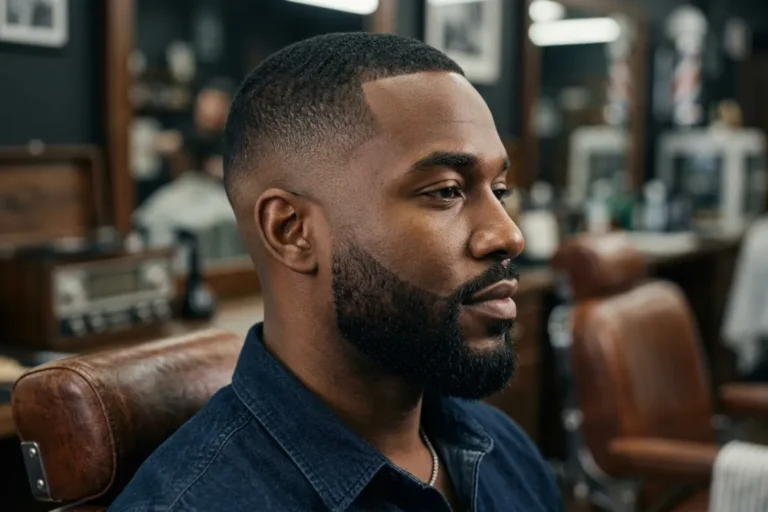

Low Taper Fade with Goatee: The Complete Style Guide for Men
You know that feeling after a fresh low taper fades? Clean sides, sharp edges, everything looks right. Then you get home...
Read More about Low Taper Fade with Goatee: The Complete Style Guide for MenFade Beard Masterclass: Low, Mid & High Taper Blending Guide
The faded beard represents the pinnacle of modern men's barbering craftsmanship. By seamlessly graduating facial hair from skin-tight sideburns into dense, sculpted chin growth, a fade beard bridges the transition between your haircut and facial hair with surgical precision. This technique eliminates bulky, awkward sideburn lines, slims the cheeks, sharpens the mandibular angles, and gives any beard stylefrom short stubble to long full beardsa high-end, bespoke aesthetic. Mastering the fade beard requires a nuanced understanding of clipper guard mathematics, wrist lever control, grain direction mapping, and blending protocols. This master guide provides step-by-step instructions to execute and maintain flawless low, mid, and high beard fades at home or in the barbershop.
Historical Evolution and Cultural Context
The fade technique originated in military barbering during the mid-twentieth century, where strict grooming regulations mandated tapered hairlines. During the 1980s and 1990s, Black and Latino barbers in New York, Philadelphia, and Los Angeles elevated fading into an intricate urban art form, pioneering the skin fade and temple taper. As the modern beard renaissance took hold in the 2010s, barbers ingeniously applied haircut fading principles in reverse to facial hairfading down from the sideburn into the beard. Today, the faded beard is a global grooming standard demanded by professional athletes, corporate executives, and style aficionados worldwide.
Anatomy, Key Classifications, and Variations
Beard fades are classified by the placement and intensity of the graduation transition:
- Low Beard Fade: The fade begins subtly just below the top of the ear, gently tapering into full density along the upper cheekbone. A conservative, versatile choice that complements classic scissor haircuts and business attire.
- Mid Beard Fade: The taper transition occurs midway down the ear (near the tragus), creating noticeable contrast and slimming the cheeks. Pairs exceptionally well with pompadours, crew cuts, and medium beards.
- High Beard Fade: The fade begins high at the temple or hairline, dropping to skin level above the earlobe before blending into the jaw. Creates a striking, high-contrast look that accentuates sharp cheekbones and angular haircuts.
- Skin / Bald Beard Fade: Tapers down to absolute skin level (00000 or foil shaver) at the sideburn junction before expanding into full density, creating an ultra-clean, modern barber finish.
Proportions and Compatibility Matrix
Achieving visual harmony requires tailoring your style to your anatomical features. Consider this comprehensive compatibility guide:
| Fade Type | Transition Zone | Recommended Haircut Pairings | Maintenance Frequency |
|---|---|---|---|
| Low Fade | Top of ear / upper sideburn | Classic side part, scissor cut, Ivy League | Every 7 10 days |
| Mid Fade | Mid-ear / earlobe level | Mid taper fade, textured crop, quiff | Every 5 7 days |
| High Fade | Temple / top of ear attachment | Buzz cut, high skin fade, slick back | Every 3 5 days |
| Bald / Skin Fade | True skin level at sideburn | Shaved head, skin taper, high bald fade | Every 3 5 days |
Step-by-Step Styling and Execution Protocol
Follow this professional sequential framework to achieve immaculate results with symmetry and structural precision:
- Establish the Baseline Density: Comb the beard completely dry. Set your clipper to your longest target guard (e.g., #3 / 10mm or #4 / 13mm) and trim the chin and lower jawline with the grain to achieve uniform bulk.
- Map the Sideburn Transition: Identify your starting transition point (low, mid, or high). Set your clipper to a closed lever (#0 or bare blade) right at the top sideburn junction to establish the shortest guideline.
- Graduated Guard Progression: Attach a #0.5 (1.5mm) guard with the lever open and flick upward 1/2 inch below the bare skin line. Move to a #1 (3mm) guard, flicking another 1/2 inch downward toward the jaw.
- Feather the Seams: Adjust the clipper lever to half-open positions between guard changes. Use a gentle outward flicking motion of the wrist ('C-scoop motion') to blend harsh horizontal weight lines seamlessly.
- Edge the Neckline and Cheeks: Use a detailer trimmer or straight razor to etch razor-sharp upper cheeklines and a clean neckline two fingers above the Adam's apple.
- Hydrate and Style: Massage 3 to 5 drops of argan beard oil into the beard and apply a light beard balm to keep the tapered whiskers laying flat.
The C-Scoop Blending Technique
The secret to eliminating demarcation lines between guard sizes is the 'C-scoop' motion. Rather than pressing the clipper blade flat against the cheek, rock the clipper blade gently into the hair and pull it away from the face in a smooth outward arc. This creates a natural feathering effect that makes the fade look airbrushed.
Material Science, Essential Ingredients, and Tooling
Mastering quality requires understanding the physical formulations, textiles, or grooming tools that deliver peak performance:
Executing an immaculate beard fade requires professional barber clippers and precision tooling:
- Adjustable Clipper with Taper Lever: Professional clippers (such as the Wahl Magic Clip, BaBylissPRO GoldFX, or Andis Master) feature micro-adjustable levers essential for seamless blending.
- Premium Guard Set: Half-guards (#0.5 / 1.5mm and #1.5 / 4.5mm) are indispensable for bridging stubborn transition lines.
- Zero-Gapped Detail Trimmer: For sharp perimeter line-ups and etching clean cheek borders.
- Single-Blade Foil Shaver: To shave the sideburn junction down to absolute skin level without irritation.
Professional Industry Secrets and Maintenance Schedules
Implement these salon and barbershop techniques to maintain peak presentation between professional appointments:
Master barbers always work with the natural grain of facial hair when fading. Because cheek hair often grows diagonally forward, cut against the grain during the initial length reduction, but use with-the-grain clipper passes when finishing the upper fade zone to ensure hair lies completely flat against the skin.
Common Styling Mistakes and Expert Solutions
Avoid these frequent pitfalls that detract from your appearance:
- Fading Too Far Down the Jaw: Taking the fade too low into the jawline removes structural density, making the jaw appear weak and undefined.
- Creating Harsh Horizontal Steps: Failing to feather between guard sizes leaves visible 'stair-step' weight lines.
- Trimming Damp Hair: Trimming wet facial hair causes severe over-cutting once the hair dries and shrinks.
- Skipping Half-Guards: Trying to jump directly from a bare blade to a #1 guard without a #0.5 guard leaves an obvious transition seam.
Seasonal Adaptations and Longevity Care
Environmental conditions require tailored adjustments to ensure durability, comfort, and protection:
In warm summer months, high skin-fade beards provide optimal cooling and sweat management. In winter, opt for a subtle low taper fade that preserves warmth along the cheeks while maintaining crisp barber-quality edges.
Professional Barbershop Consultation and Diagnostic Guide
When consulting with a master barber regarding fade beard, clear communication of your personal aesthetic goals and lifestyle constraints is paramount. Bring reference photographs that showcase the specific silhouette, density, and neckline placement you desire. A professional barber assesses the natural density distribution of your facial follicles, checks for growth whorls or cowlicks near the chin, and identifies any asymmetric bone structure. They will recommend subtle adjustments to guard lengths and graduation angles to tailor the style to your exact facial geometry, ensuring your daily styling routine remains quick, effortless, and effective.
Advanced Product Chemistry and Ingredient Efficacy
Selecting the right grooming formulations requires an understanding of how cosmetic ingredients interact with the stratum corneum and facial hair cuticles. Natural plant-derived carrier oilssuch as golden jojoba oil, Moroccan argan oil, and cold-pressed sweet almond oilcontain high concentrations of essential oleic and linoleic fatty acids that penetrate deep into the dermal matrix. Unlike synthetic mineral oils or petroleum derivatives that create an occlusive film over pores, plant-based lipids integrate seamlessly with human sebum, providing breathable hydration that prevents follicle clogging, soothes inflammation, and strengthens hair tensile strength against brittle breakage.
Tool Maintenance, Hygiene, and Blade Sterilization
The longevity and precision of your grooming tools directly influence the health of your facial hair and skin. Clipper and trimmer blades accumulate microscopic hair fragments, dried skin cells, and microbial flora with every use. Implement a strict sanitization protocol: brush out trapped debris after each grooming session, spray the cutting heads with an antibacterial and antiviral blade disinfectant, and apply two drops of lubricating mineral clipper oil across the teeth to prevent friction heat and blade dulling. Store wooden brushes and acetate combs in a well-ventilated, dry environment to preserve bristle integrity and prevent bacterial growth.
Summary and Personal Aesthetic Philosophy
True personal style is an authentic reflection of discipline, self-knowledge, and intentional presentation. By understanding the core fundamentals, investing in quality craftsmanship, maintaining consistent care rituals, and honoring your natural proportions, you project an enduring aura of confidence, elegance, and distinction across every environment.
Frequently Asked Questions
Got questions? We've got answers. Explore our most asked questions about fade beard.
A fade beard is a grooming technique where facial hair gradually tapers from bare skin or short stubble at the sideburns into fuller, thicker density along the jaw and chin.
A low fade starts just below the top of the ear; a mid fade transitions at the middle of the ear; and a high fade starts near the temple, creating high contrast.
Yes. You need an adjustable clipper with a taper lever, half-guards (#0.5 and #1.5), a good mirror, and mastery of the upward 'C-scoop' wrist flicking technique.
Because hair grows about 0.5mm per day, a sharp fade beard requires touch-ups every 3 to 7 days to maintain a clean, seamless gradient.
Yes. Faded beards are especially effective for round and square faces because slimming the cheeks visually elongates the face and defines the jawline.
You need professional clippers with an adjustable lever, guard sizes #0.5 to #3, a detailer trimmer, a foil shaver, and a boar bristle brush to align hairs.