
Short Beard Styles
Explore the definitive guide to short beard styles for modern men. From timeless designer stubble and the corporate beard to faded short beards and the Balbo, discover low-maintenance, high-impact looks that define your jawline and elevate your everyday professional image.
All Posts on Short Beard Styles
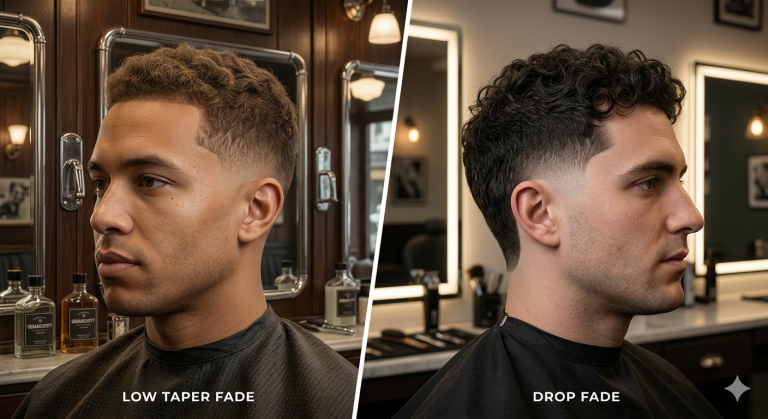

Low Taper vs Drop Fade: Which One Looks Better on You?
People often confuse low tapers with drop fades, even though both cuts have clear differences. Yeah, both cuts keep the...
Read More about Low Taper vs Drop Fade: Which One Looks Better on You?The Ultimate Guide to Short Beard Styles
Short beard styles have dominated men's grooming trends for the better part of a decade, and for good reason. They strike the perfect balance between rugged masculinity and polished professionalism. Unlike a full, lumberjack-length beard which requires months of patience and daily oil rituals, a short beard offers immediate gratification. It frames the face, hides imperfections, and signals maturity without the "unkempt" stigma that sometimes plagues longer growth in corporate environments.
Why Choose a Short Beard?
Versatility Across Settings
The primary advantage of a short beard is its chameleon-like ability to adapt. A 3mm stubble looks effortlessly cool at a weekend barbecue, while a neatly trimmed 10mm corporate beard commands respect in the boardroom. You don't need to commit to a single "look"; with a quality trimmer, you can shift your aesthetic in minutes.
Low Maintenance, High Reward
Lets be honest: most men want the look of a beard without the lifestyle overhaul. Short beards require significantly less product (less oil, less balm), less washing time, and less combing. They don't trap food, they don't get caught in zippers, and they dry instantly after a shower. For the busy professional or the minimalist groomer, this is the sweet spot.
Solving Patchiness
One of the biggest insecurities men face is patchy cheek growth or a weak connector between the mustache and chin. Long beards expose these gaps; short beards conceal them. By keeping the length uniform and short (usually between 1mm and 10mm), you create a visual texture that reads as "full" even if the density isn't genetically perfect. It is the ultimate hack for thin beards.
The Anatomy of Length: Defining "Short"
Before diving into specific styles, it helps to understand the measurement spectrum. In the grooming world, "short" generally encompasses everything from 0.5mm (heavy shadow) up to 15mm (heavy stubble / short boxed beard). Anything beyond 15mm usually enters "medium beard" territory.
- 0.5mm - 1mm (The 5 O'Clock Shadow): Barely there, just texture. Requires daily or every-other-day shaving with a foil shaver or trimmer without a guard.
- 2mm - 4mm (Designer Stubble / Heavy Stubble): The classic "designer stubble" look. Visible hair, distinct shadow, very sharp jawline definition.
- 5mm - 10mm (The Short Boxed Beard / Corporate Beard): Actual beard territory. Covers the skin completely. Requires shaping of the neckline and cheek lines.
- 10mm - 15mm (The Heavy Short Beard): Significant coverage, hides skin completely, starts to show some movement/flow.
Top 10 Short Beard Styles for 2024
1. The Classic Stubble (3mm - 5mm)
This is the gold standard. Think George Clooney or Jason Statham. It is masculine, mature, and universally flattering. The key to pulling this off is contrast. You must maintain a razor-sharp neckline (usually two fingers above the Adam's apple) and clean cheek lines. Without those hard edges, 3mm stubble looks like "forgot to shave" rather than "styled stubble."
Best For:
Oval, square, and rectangular faces. Great for patchy growth.Maintenance:
Trim every 2-3 days.2. The Corporate Beard (10mm - 12mm)
The go-to for the C-suite. It is a full, short boxed beard where the length is uniform across the cheeks, chin, and mustache. The cheek lines are carved high and straight (or slightly rounded) to maximize jawline width. The neckline is critical hereit must be a clean, high U-shape. This style says "I have the discipline to grow a beard and the precision to maintain it."
Best For:
Round faces (adds length), Diamond faces (balances cheekbones).Maintenance:
Trim weekly; edge up neckline/cheeks twice a week.3. The Short Boxed Beard (8mm - 10mm)
Similar to the Corporate Beard but slightly more relaxed. The "boxed" refers to the squared-off shape at the bottom of the chin rather than a natural point. It creates a strong, geometric chin shadow. This is excellent for men with weaker chins as it adds visual weight and structure to the lower third of the face.
Best For:
Round, heart, and triangle face shapes.Maintenance:
Weekly trim; define the bottom "box" line carefully.4. The Goatee with Stubble (Chin 10mm, Cheeks 1-2mm)
A modern twist on the 90s goatee. You grow a short beard on the chin and mustache (connected or disconnected) but keep the cheeks at a heavy stubble length (1-2mm). This draws the eye to the center of the face, elongating the look. Its edgier than a full short beard and requires precise fading between the chin and cheek lengths.
Best For:
Round and square faces (adds length).Maintenance:
High. Requires two guard lengths and blending skills.5. The Balbo (Short Version)
Named after Italo Balbo, this is a disconnected style: a floating mustache, a soul patch, and a chin beard that doesn't connect to the sideburns. In a short version (5mm-8mm), it looks incredibly sharp and architectural. It requires zero cheek growth, making it the perfect style for men with patchy cheeks. The negative space on the cheeks actually highlights the jawline.
Best For:
Narrow faces, patchy cheek growth.Maintenance:
High precision edging required weekly.6. The Van Dyke (Short)
A classic artistic style: a pointed goatee chin beard + a detached mustache. Kept short (5mm-8mm), it loses the "villain" vibe and gains a sophisticated, creative flair. It requires a very steady hand to maintain the gap between the mustache and the chin beard.
Best For:
Oval and oblong faces.Maintenance:
Very High. Requires frequent shaping.7. The Anchor Beard
A variation of the Balbo/Van Dyke family. It combines a pencil-thin mustache (or standard mustache) with a chin beard that fans out along the jawline, resembling a ship's anchor. Kept short, it is a masterclass in jawline definition. It visually widens a narrow chin.
Best For:
Heart-shaped and diamond faces.Maintenance:
High. Requires sculpting the jawline edges.8. The Mutton Chops / Sideburns (Short)
While technically sideburns, when grown thick and short (10mm) and connected to a mustache (with a shaven chin), they become a beard style. Think Wolverine / Hugh Jackman but groomed short. It is bold, retro, and incredibly distinctive. It frames the face horizontally.
Best For:
Long, narrow faces (adds width).Maintenance:
Shaving the chin daily; trimming sides weekly.9. The Chin Strap / Jawline Beard
A thin line of hair (3mm-5mm) tracing the jawline from sideburn to sideburn, often including a mustache. It is essentially "outline" of a beard. It creates instant jawline definition for men who lack bone structure there. It looks best when very precise; a crooked chin strap looks messy instantly.
Best For:
Round faces (adds angularity).Maintenance:
Daily edging required.10. The Faded Beard (The Modern Standard)
This isn't a distinct shape, but a technique applied to any short style (Corporate, Boxed, Stubble). The hair is longest at the chin (e.g., 10mm) and gradually fades shorter (e.g., 3mm) as it moves up the cheeks toward the sideburns/ears. This mimics a haircut fade. It blends the beard into the hairline seamlessly, looking incredibly natural and high-end. It is the single best way to handle the transition from beard to sideburns/hair.
Best For:
Everyone. Especially good if beard color differs from hair color.Maintenance:
Requires a trimmer with adjustable lever or multiple guards; best done by a barber initially.Matching Styles to Face Shapes: A Strategic Approach
Choosing a style isn't just about what looks cool on Instagram; it's about geometry. The goal of facial hair is almost always to create the illusion of an oval facethe "ideal" male proportion.
Round Face
Goal: Add length, reduce width.
- Do: Corporate Beard, Short Boxed Beard, Goatee with Stubble, Chin Strap (kept pointy at chin).
- Don't: Full cheek coverage at uniform length (Mutton Chops, Heavy Stubble on cheeks) this widens the face further.
- Pro Tip: Keep the sides shorter (fade them) and leave slightly more length on the chin.
Square Face
Goal: Soften the angular jaw, or lean into it.
- Do: Classic Stubble (softens the corner), Short Boxed Beard (rounded bottom), Balbo.
- Don't: Sharp, square bottom lines on the beard (makes you look like a Lego man).
- Pro Tip: Round off the corners of your neckline and cheek lines slightly.
Oblong / Rectangular Face
Goal: Add width, reduce length.
- Do: Heavy Stubble (uniform), Mutton Chops, Short Boxed Beard (wider bottom), Faded Beard (keep cheeks fuller).
- Don't: Goatees, Van Dykes, Anchor beards, Chin Straps these elongate the face further.
- Pro Tip: Grow the sides out a bit thicker/longer than the chin.
Triangle / Pear Face (Narrow forehead, wide jaw)
Goal: Balance the wide jaw.
- Do: Balbo, Van Dyke, Anchor Beard (focus hair on chin/mustache, keep cheeks clean/faded).
- Don't: Full cheek coverage, Mutton Chops.
- Pro Tip: Keep the mustache slightly fuller to draw eyes upward.
Diamond Face (Wide cheekbones, narrow forehead/chin)
- Do: Corporate Beard, Short Boxed Beard, Stubble. Styles that add width to the chin and cover the cheekbones slightly.
- Don't: Chin straps, Goatees (accentuate narrow chin).
Heart Face (Wide forehead, pointed chin)
- Do: Stubble, Short Boxed Beard, Anchor Beard. Add bulk to the narrow chin.
- Don't: Clean shaven cheeks with only chin hair (over-emphasizes the point).
The Grooming Protocol: How to Maintain a Perfect Short Beard
A short beard looks "intentional" only when the skin underneath is healthy and the lines are crisp. Here is the non-negotiable routine.
1. The Tools of the Trade
- High-Quality Trimmer: Look for stainless steel/titanium blades, strong motor, and fine length adjustments (0.5mm steps). Brands: Wahl, Philips Norelco, Panasonic, BaBylissPRO.
- Foil Shaver: Essential for the neckline and cheek lines. A rotary shaver pulls hairs; a foil shaver gives a surgical clean line. (e.g., Braun Series 9, Panasonic Arc5, or a dedicated Andis ProFoil).
- Detail Trimmer / T-Blade: For the mustache line, soul patch edges, and intricate shaping (Balbo/Van Dyke).
- Beard Comb/Brush: Kent comb (acetate) or Boar bristle brush. Plastic combs create static and snag.
- Magnifying Mirror: 5x or 10x. You cannot edge a 3mm beard accurately in a standard foggy bathroom mirror.
2. The Weekly Trim Routine (For 5mm+ Styles)
- Wash & Dry: Wash with beard wash (not head shampoo). Towel dry thoroughly. Trim dry. Wet hair stretches and lays flat; you will cut too much if you trim wet.
- Comb Down: Comb everything downward in the direction of growth.
- Bulk Reduction: Use the longest guard you intend to keep (e.g., 10mm). Go over the whole beard against the grain first, then with the grain to even it out.
- Define the Neckline: Place two fingers horizontally above the Adam's apple. That is your baseline. Shave everything below with a foil shaver. Do not follow the jawbone down under the chin; that creates the dreaded "neckbeard" look. The line should be a U-shape connecting the back of the jaw hinges.
- Define the Cheek Lines: This is a style choice. Natural: Follow your natural growth line, just cleaning strays. Sculpted: Draw a straight or slightly curved line from the sideburn corner to the mustache corner. Use the foil shaver.
- Mustache Maintenance: Comb mustache down over the lip. Trim with scissors or a detail trimmer (no guard) so it just kisses the vermillion border (the red part of the lip). Do not cover the lip.
- Fade (Optional): If doing a fade, switch to a shorter guard (e.g., 3mm) and blend the upper 1/3 of the cheeks into the sideburns/hair.
- Oil & Brush: Apply 3-5 drops of beard oil (jojoba/argan base), massage into skin, brush through to distribute.
3. The Daily Stubble Routine (1mm - 4mm)
For stubble, you don't "trim" daily; you "touch up."
- Every morning/evening: Run the foil shaver over the neckline and cheek lines to keep them razor-sharp.
- Every 2-3 days: Run the trimmer (without guard or with 1mm guard) over the whole area to reset length.
- Daily: Splash water, apply a light moisturizer or stubble cream (lighter than oil) to prevent "sandpaper" face and itch.
Essential Products for Short Beards
Beard Oil (Non-Negotiable)
Even at 3mm, the skin underneath produces sebum that gets trapped, causing itch and "beardruff" (dandruff). Oil penetrates the skin. Ingredients to look for: Jojoba oil (mimics sebum), Argan oil (vitamin E), Grapeseed oil (light, non-greasy), Vitamin E. Avoid: Heavy castor oil or coconut oil (solid at room temp, clogs pores on short beards).
Beard Balm / Utility Balm
For 5mm+ beards. Provides light hold to keep flyaways down and conditions the hair shaft. Contains beeswax/butter (shea/mango). Use a pea-sized amount.
Beard Wash / Cleanser
Surfactants in head shampoo strip the face's delicate moisture barrier. Use a dedicated beard wash (low pH, sulfate-free) 2-3 times a week. On off days, just rinse with water.
Exfoliator
Once a week, use a chemical exfoliant (AHA/BHA like glycolic or salicylic acid) or a very gentle physical scrub before trimming. This lifts ingrown hairs (common in short beards where hair curls back immediately) and removes dead skin so the trimmer glides smoothly.
Common Mistakes That Ruin Short Beards
1. The "Neckbeard" Line
Shaving the neckline too low (on the neck) or following the jawbone under the chin. This visually removes your jawline and adds weight to the neck. Fix: High and tight. Two fingers above Adam's apple.
2. Cheek Lines Too Low / Too High
Shaving into the thick growth (too low) creates a weird "floating" beard. Shaving too high (near the eye) looks painted on. Fix: Find the natural corner where your cheek hair density drops off. Connect that to the mustache corner.
3. Ignoring the Mustache
A long mustache covering the lip looks messy on a short beard. It breaks the "clean" aesthetic. Fix: Trim the lip line weekly with scissors.
4. Using Head Hair Products
Head hair products (gel, pomace, thick conditioners) are formulated for the scalp, which is thicker and oilier than facial skin. They cause breakouts and irritation on the face.
5. Trimming Wet
As mentioned, wet hair is longer. You will inevitably take off 2mm more than intended. Always trim bone dry.
6. The "Unibrow" of Beards (Connector Issues)
If your mustache doesn't connect to your chin beard naturally, do not try to force it by letting the connector grow long while keeping the rest short. It looks stringy. Fix: Shave the connector clean (Balbo style) or keep everything at a uniform stubble length (3mm) where the gap disappears visually.
Advanced Styling: The Fade Masterclass
The faded beard is the hallmark of a professional groom. It solves the harsh "helmet head" line where the beard meets the sideburns/hair. Here is how to execute a Skin Fade to Beard transition:
- Ask your barber to fade your sideburns down to skin (0mm) at the top of the ear.
- Your beard starts at the bottom of the sideburn (where the jaw hinges).
- Set your trimmer to the longest guard (e.g., 10mm) at the chin.
- Use a 6mm guard on the lower cheeks.
- Use a 3mm guard on the upper cheeks (near the sideburn).
- Use a 1.5mm or 0.5mm guard right at the sideburn junction.
- Blend the seams by flicking the wrist upward ("feathering") at each transition zone.
This creates a gradient that makes the beard look like it's growing *out of* the skin naturally, rather than stuck on top.
Seasonal Adjustments
Summer
- Go shorter (1mm-3mm). Less sweat, less itch, cooler.
- Switch to lighter oils (Grapeseed, Hempseed) or serums.
- Wash more frequently (salt from sweat irritates follicles).
- Sunscreen on the exposed neckline/cheeks is mandatory.
Winter
- Grow it out slightly (5mm-10mm) for insulation.
- Heavier balms/butters (Shea, Mango) to combat dry indoor heat and cold wind.
- Humidifier in bedroom prevents brittle hair and "beardruff."
- Don't skip the necklinescarves rubbing on a messy neckline cause irritation.
The Psychology of the Short Beard
Studies in social psychology consistently show that men with short, well-groomed facial hair are perceived as more dominant, mature, and aggressive than clean-shaven men, butcruciallymore trustworthy, attractive, and sociable than men with full, long beards. The short beard hits the "sweet spot" of signaling testosterone (masculinity) without signaling potential hygiene issues or anti-social tendencies sometimes associated with unkempt long beards. In a professional context, a 2017 study in the Journal of Evolutionary Psychology found that men with groomed stubble were rated highest for hiring potential in leadership roles.
Final Thoughts: Your Face, Your Rules
The world of short beard styles is vast, but the principles are simple: Precision over Length. A 3mm stubble with laser-sharp lines looks infinitely more expensive and masculine than a 20mm beard with a fuzzy neckline. Invest in the tools, learn your face geometry, and commit to the 5-minute weekly routine. Whether you opt for the rugged charm of Designer Stubble, the executive presence of the Corporate Beard, or the architectural precision of a Faded Balbo, the short beard remains the most powerful, versatile tool in a man's grooming arsenal. Start with the Classic Stubble this weekendmaster the necklineand build your signature look from there.
Frequently Asked Questions
Got questions? We've got answers. Explore our most asked questions about short beard styles.
Studies and grooming experts generally agree that heavy stubble (approx. 3mm - 5mm / 10-day growth) is consistently rated as the most attractive facial hair length. It signals masculinity without the maintenance hurdles of long beards.
You have three main strategies: 1) Go shorter with a uniform 2mm-3mm stubble to blend patches, 2) Adopt disconnected styles like the Balbo or Goatee that exclude patchy cheeks, or 3) Fade the cheeks down to 1mm near the ears.
Place two fingers horizontally on your neck just above the Adam's apple. Shave everything below that line in a smooth U-shape connecting behind the jaw hinges. Never shave up to the jawbone itself.
For a sharp, fixed-length look (e.g., 8mm), trim once a week. For stubble (1mm-4mm), run the trimmer every 2 to 3 days to maintain the specific shadow density, edging borders every 1 to 2 days.
Yes, absolutely. Even at 1mm, hair shafts wick moisture from the skin, causing stubble itch and flaking. Beard oil penetrates the skin to eliminate irritation and soften bristles.
Yes. Use a trimmer with a taper lever or half-guards (0.5mm, 1mm, 2mm, 3mm). Start with the longest guard at the chin and gradually reduce guard sizes as you move upward toward the sideburns.