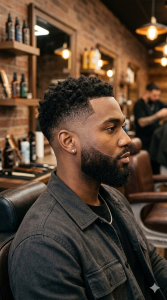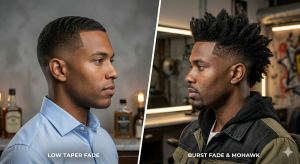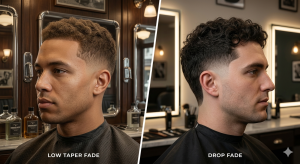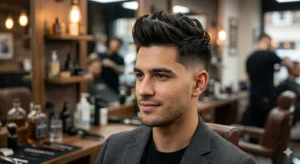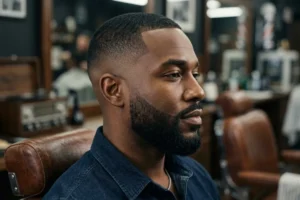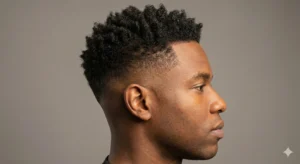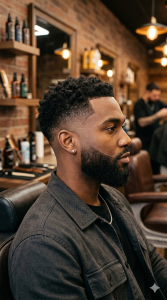
Low Taper Fade
Discover the low taper fade haircut for men. Master this subtle, professional style that cleanly tapers sideburns and the neckline without sacrificing side hair density. Perfect for office wear, classic cuts, and textured hair.
All Posts on Low Taper Fade
Common Low Taper Fade Mistakes and How to Avoid Them
The low taper fade looks straightforward from the outside — clean sides, subtle transition, natural finish. But getting...
Read More about Common Low Taper Fade Mistakes and How to Avoid ThemLow Taper Fade for Interviews: A Professional Haircut That Makes a Great First Impression
Walking into an interview, your appearance gets read before you say a single word. Interviewers form impressions quickly...
Read More about Low Taper Fade for Interviews: A Professional Haircut That Makes a Great First ImpressionLow Taper Fade with Beard for Black Men: Best Styles and Grooming Tips
A low taper fade paired with a beard has been a barbershop staple for years, and for good reason. The clean sides, the n...
Read More about Low Taper Fade with Beard for Black Men: Best Styles and Grooming TipsLow Taper Fade Styles for Wavy Hair
Wavy hair has its own personality. It moves on its own, holds texture without much effort and generally looks better whe...
Read More about Low Taper Fade Styles for Wavy HairLow Taper Fade for Summer: Stay Cool and Look Sharp
Summer is brutal on hair. Heavy styles that looked great in winter suddenly feel suffocating once the heat kicks in — sw...
Read More about Low Taper Fade for Summer: Stay Cool and Look SharpLow Taper Fade Styles for Straight Hair: Best Haircuts for Men
Straight hair and a low taper fade go hand in hand. The smooth, flat texture of straight hair makes the fade look crisp...
Read More about Low Taper Fade Styles for Straight Hair: Best Haircuts for MenLow Taper Fade with Buzz Cut: Best Styles, Guard Sizes & Barber Tips
A low taper fade with buzz cut is one of the easiest men’s hairstyles to manage right now. It keeps the hair short and s...
Read More about Low Taper Fade with Buzz Cut: Best Styles, Guard Sizes & Barber TipsLow Taper vs Drop Fade: Which One Looks Better on You?
People often confuse low tapers with drop fades, even though both cuts have clear differences. Yeah, both cuts keep the...
Read More about Low Taper vs Drop Fade: Which One Looks Better on You?Low Taper Fade for Wedding: The Best Groom Hairstyles to Try
Most guys spend months sorting out their wedding look. The sherwani or suit gets finalized early. Shoes get picked. Acce...
Read More about Low Taper Fade for Wedding: The Best Groom Hairstyles to TryLow Taper Fade with Faux Hawk: The Bold Yet Clean Look Worth Trying
Some haircuts blend in. Others make a quiet statement without shouting. The low taper fade with a faux hawk sits firmly...
Read More about Low Taper Fade with Faux Hawk: The Bold Yet Clean Look Worth TryingLow Taper Fade Without Beard: Styles, Tips and Everything You Need to Know
Nobody told me this when I first started getting fades — you do not need a beard for the cut to look good. I used to bel...

Read More about Low Taper Fade Without Beard: Styles, Tips and Everything You Need to KnowLow Taper Fade for Street Style: The Complete Guide for Men (2026)
Fresh cut, clean sides, a bit of texture on top. No effort, no overthinking. It just works. That is what a low taper fad...
Read More about Low Taper Fade for Street Style: The Complete Guide for Men (2026)Low Taper Fade Haircut Guide: Classic, Clean & Professional
The low taper fade is the gold standard of understated, gentlemanly refinement in men's hairstyling. Unlike bold, high-contrast skin fades that expose significant scalp, the low taper fade confines its subtle graduation to the lowest half-inch of the sideburns and the very bottom perimeter of the neckline. This creates a clean, intentional finish while preserving natural hair density, fullness, and classic silhouette across the entire head. Universally appropriate for corporate boardrooms, formal events, and casual everyday wear, the low taper fade is the ideal choice for men who desire a polished barbershop finish without aggressive contrast. This guide explores low taper anatomy, face shape matching, and maintenance.
Historical Evolution and Cultural Context
The low taper has been the foundation of classic barbering for over a century. From Edwardian gentlemen to mid-century Hollywood icons, the low taper represented clean hygiene and sartorial poise. Today, it remains the ultimate choice for men who want modern cleanliness paired with timeless elegance.
Key Styles, Cut Anatomy, and Variations
Low tapers complement classic and textured hairstyles:
- Low Taper with Classic Side Part: The executive standard for corporate settings.
- Low Taper with Textured Quiff: Balances modern volume on top with subtle, clean edges.
- Low Taper with Flow / Middle Part: Keeps perimeter neat while allowing medium-length hair to flow naturally.
Face Shape and Hair Texture Compatibility Matrix
Selecting the optimal haircut requires understanding how hair density, curl pattern, and cranial bone structure interact:
| Low Taper Style | Top Length | Best Setting | Maintenance |
|---|---|---|---|
| Executive Side Part | 2 3 inches | Business Professional | Every 3 4 weeks |
| Textured Flow | 3 5 inches | Smart Casual / Creative | Every 4 weeks |
| Classic Ivy League | 1 1.5 inches | All occasions | Every 3 weeks |
Step-by-Step Styling and Barber Execution Protocol
Follow this sequential framework to achieve salon-quality styling and structural hold at home:
- Establish Subtle Baseline: Taper the lowest 1/2 inch of the sideburns down to #0.5.
- Blend into Sideburns: Use #1 and #1.5 guards to feather into the full side hair.
- Taper the Nape: Create a clean, gradual taper at the neck base, preserving a natural neckline.
- Scissor-Over-Comb Top: Style the top hair to desired length.
Essential Products, Formulations, and Styling Tools
Mastering hair texture requires the proper combination of pre-stylers, finishing clays, and professional tools:
Requires clippers with fine guards, styling paste, and a classic comb.
Professional Barbershop Secrets and Edge Precision
Incorporate these master barber techniques to maintain clean contours and sharp graduation between appointments:
Preserving natural weight around the ears ensures a soft, organic drape that grows out gracefully over 4 to 5 weeks.
Common Haircut Mistakes and How to Avoid Them
Avoid these frequent styling pitfalls that compromise hair health and visual balance:
- Taking the Taper Too High: Keep the transition strictly below the top of the ear to maintain a true low taper.
- Squaring the Neckline Harshly: A blocky squared neck looks artificial; always taper the nape softly.
Seasonal Care and Maintenance Cadences
Environmental fluctuations impact hair cuticle hydration and scalp sebum production. Adapt your regimen across seasons:
The perfect year-round versatile haircut, providing extra warmth in winter while looking clean in summer.
Barbershop Communication, Terminology, and Consultation Guide for Low Taper Fade
Achieving your ideal haircut requires clear, precise communication with your master barber. Never rely solely on generic names like 'short back and sides' or 'medium fade,' as barber interpretations vary widely. When requesting low taper fade, specify exact guard numbers (e.g., '#1 closed tapering into a #2 on the temples'), define your preferred neckline finish (tapered vs. squared vs. rounded), state whether you want scissor texture or point-cutting on top, and bring two or three high-resolution reference photographs displaying the front, side profile, and back angles. An expert barber will assess your hair growth whorls, cowlicks, temporal recession, and skull geometry to customize the perimeter boundaries to your unique anatomy.
Blow-Drying Mechanics, Directional Airflow, and Pre-Styling Chemistry
Eighty percent of any great hairstyles volume, texture, and structural direction is established during the initial blow-dry rather than by finishing products alone. Apply a heat-activated pre-stylersuch as a mineral sea salt spray or lightweight grooming tonicto clean, towel-damp hair. Use a vented tunnel brush or round boar-bristle brush while blow-drying on medium heat, directing the airflow from roots to tips in the natural direction of desired hair flow. Maintain the dryer nozzle at a 45-degree angle approximately three inches from the hair to avoid scorching the keratin cuticle. Conclude the blow-dry with a 10-second blast of cold air (the 'cool shot' button) to contract the cuticle layer, lock the volume in place, and impart natural shine.
Scalp Health, Follicular Longevity, and Trimming Schedules
Healthy, vibrant hair requires an optimal scalp environment. The human scalp contains over 100,000 hair follicles that produce natural protective sebum. To prevent sebum buildup, follicular inflammation, and fungal flaking (Malassezia), wash your hair two to three times weekly with a sulfate-free botanical cleanser, massaging the scalp with circular fingertip pressure to stimulate microvascular perfusion. Schedule precision maintenance trims according to your style's requirements: short fades and precision line-ups require touch-ups every two weeks, classic crew cuts and tapers every three to four weeks, and medium-to-long textured flow styles every six to eight weeks to eliminate split ends and maintain clean geometric proportions.
Barbershop Communication, Terminology, and Consultation Guide for Low Taper Fade
Achieving your ideal haircut requires clear, precise communication with your master barber. Never rely solely on generic names like 'short back and sides' or 'medium fade,' as barber interpretations vary widely. When requesting low taper fade, specify exact guard numbers (e.g., '#1 closed tapering into a #2 on the temples'), define your preferred neckline finish (tapered vs. squared vs. rounded), state whether you want scissor texture or point-cutting on top, and bring two or three high-resolution reference photographs displaying the front, side profile, and back angles. An expert barber will assess your hair growth whorls, cowlicks, temporal recession, and skull geometry to customize the perimeter boundaries to your unique anatomy.
Blow-Drying Mechanics, Directional Airflow, and Pre-Styling Chemistry
Eighty percent of any great hairstyles volume, texture, and structural direction is established during the initial blow-dry rather than by finishing products alone. Apply a heat-activated pre-stylersuch as a mineral sea salt spray or lightweight grooming tonicto clean, towel-damp hair. Use a vented tunnel brush or round boar-bristle brush while blow-drying on medium heat, directing the airflow from roots to tips in the natural direction of desired hair flow. Maintain the dryer nozzle at a 45-degree angle approximately three inches from the hair to avoid scorching the keratin cuticle. Conclude the blow-dry with a 10-second blast of cold air (the 'cool shot' button) to contract the cuticle layer, lock the volume in place, and impart natural shine.
Scalp Health, Follicular Longevity, and Trimming Schedules
Healthy, vibrant hair requires an optimal scalp environment. The human scalp contains over 100,000 hair follicles that produce natural protective sebum. To prevent sebum buildup, follicular inflammation, and fungal flaking (Malassezia), wash your hair two to three times weekly with a sulfate-free botanical cleanser, massaging the scalp with circular fingertip pressure to stimulate microvascular perfusion. Schedule precision maintenance trims according to your style's requirements: short fades and precision line-ups require touch-ups every two weeks, classic crew cuts and tapers every three to four weeks, and medium-to-long textured flow styles every six to eight weeks to eliminate split ends and maintain clean geometric proportions.
Summary and Personal Aesthetic Philosophy
Your hairstyle is the primary architectural frame of your face and the most visible expression of your personal aesthetic. By understanding your facial geometry, selecting the proper cut, investing in quality styling products, and maintaining regular barber appointments, you project an enduring aura of confidence, grooming discipline, and effortless style.
Frequently Asked Questions
Got questions? We've got answers. Explore our most asked questions about low taper fade.
A low taper fade is a subtle haircut that tapers hair at the lowest portion of the sideburns and neckline, leaving full density on the rest of the sides.
Yes. The low taper fade is widely considered the most professional, conservative, and polished modern haircut for corporate settings.
Because it grows out naturally, a low taper fade looks great for 3 to 4 weeks before needing a quick perimeter clean-up.
A low fade removes hair around the entire lower sides and back; a low taper only cleans the sideburns and nape, leaving full hair behind the ears.
Yes. A low taper is the perfect way to clean up the edges and neck of medium-to-long flowing hairstyles without cutting overall length.
Styling paste, low-shine pomade, and light matte creams provide flexible hold and natural shine that complement classic low taper cuts.