Low Taper Fade with Mustache: The Complete Style Guide for Men
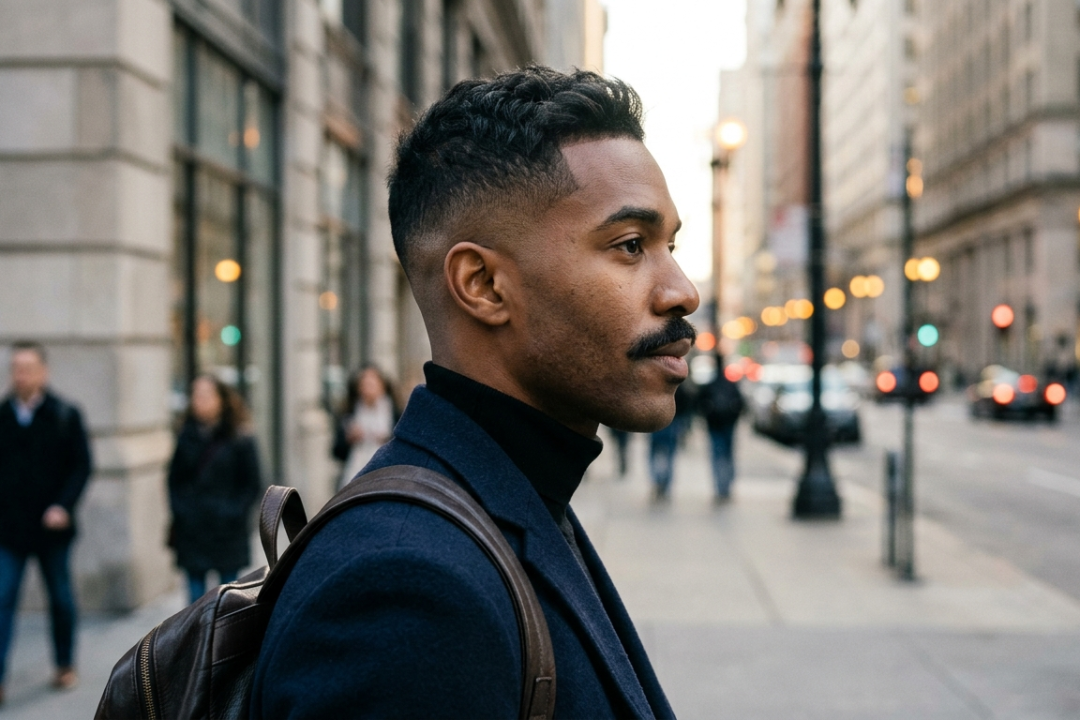
You step out of the barbershop, the cut is fresh, the sides are tight and something still feels off. The haircut is not the problem. Most of the time it comes down to the face. Nothing going on up front, so even a solid fade ends up looking incomplete. That is where a mustache comes in. The right one next to a low taper fade does not just add facial hair — it finishes the whole look. Here is everything you need to know to get it right.
What Is a Low Taper Fade
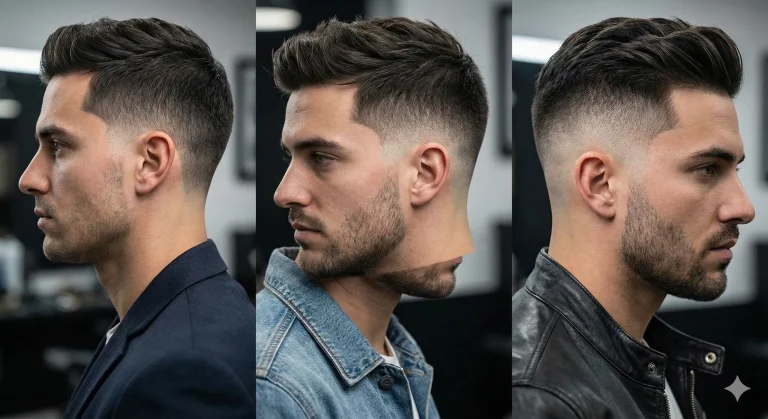
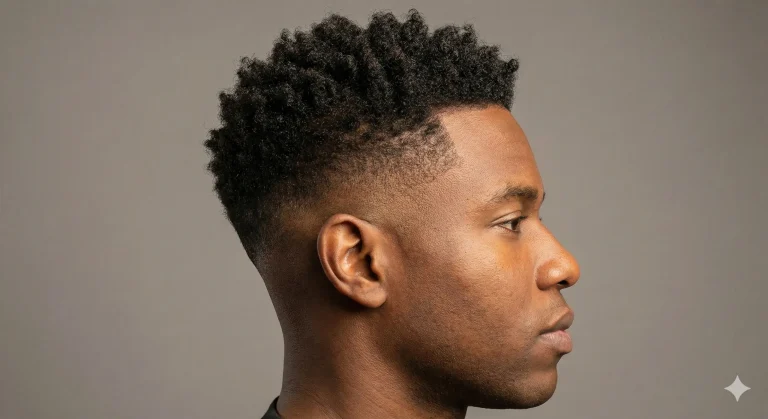
On the sides and back, the hair gets shorter as it goes down, starting near the ears and finishing clean at the neckline. “Low” just means the fade starts close to the ears, not higher up on the head.
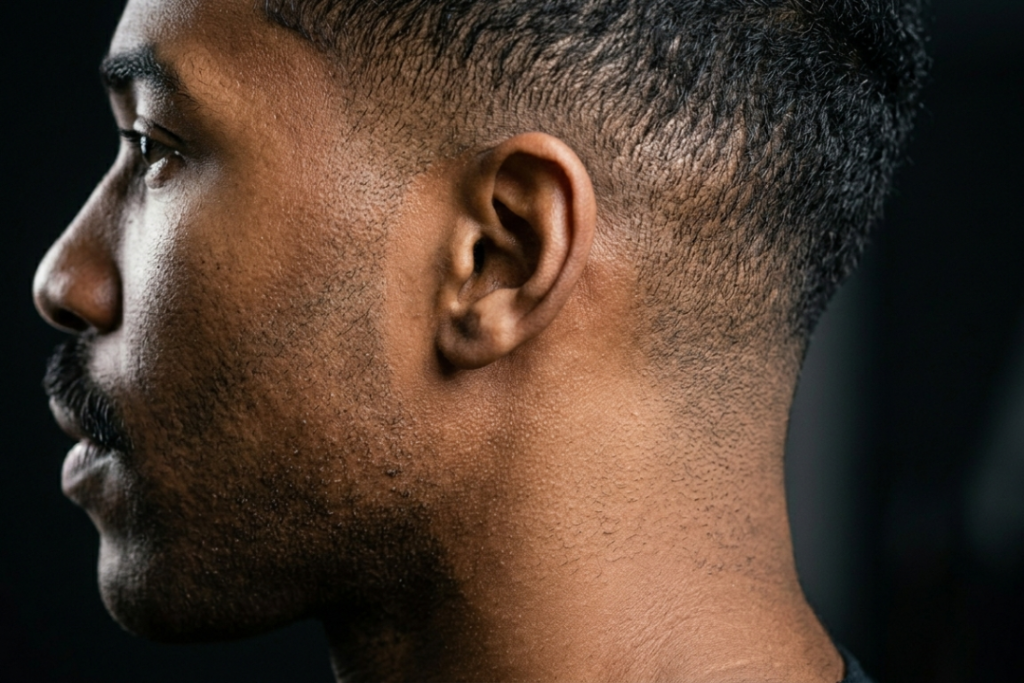
It is a quiet cut. Nothing loud about it. Working at a job interview, a wedding, a casual hangout — does not matter. Mid tapers start around the temples, high tapers go even further up. The low version stays subtle, which is why so many guys keep coming back to it.
Why a Mustache Completes the Look
A fade pulls attention toward your face. Once the sides are clean, your features are front and center. Without anything there, that attention has nowhere to go.
A mustache fixes that. It gives the face a focal point — jaw looks sharper, the whole thing reads as intentional. It also suits guys who are not ready for a full beard. You get a lot of the same effect with a fraction of the upkeep.
5 Best Mustache Styles for a Low Taper Fade
Classic Natural Mustache
Full, sitting just above the upper lip, nothing sculpted or fancy. Works on almost every face shape and fits into any routine without much effort. Quick trim a couple times a week, comb it in the morning — done. Best starting point for anyone new to this combo.
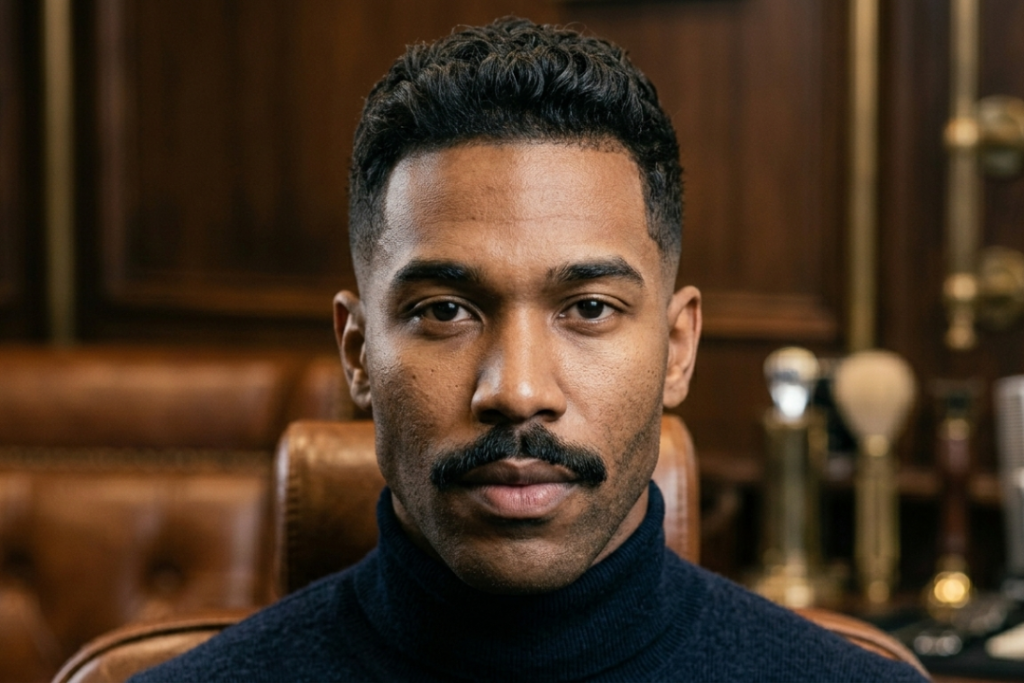
Chevron Mustache
Fuller and wider, covers the whole upper lip. More presence than the classic but still wearable. Works best on square or oval faces. The clean sides of the fade balance out the fullness nicely. If you want the look to register without being flashy, this is the one to go with.
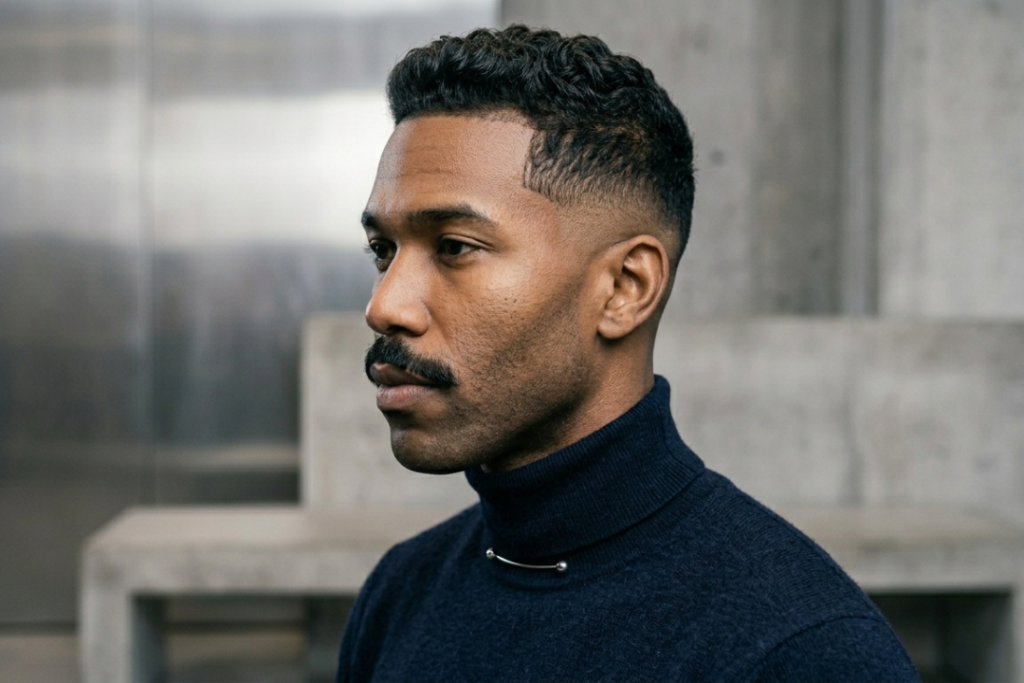
Pencil Thin Mustache
A fine, precise line right above the lip — almost looks drawn on. Suits slimmer or oval faces. Requires consistent upkeep because the edges have to stay sharp or it loses its effect entirely. High maintenance but one of the most distinctive looks you can put together when it is done right.
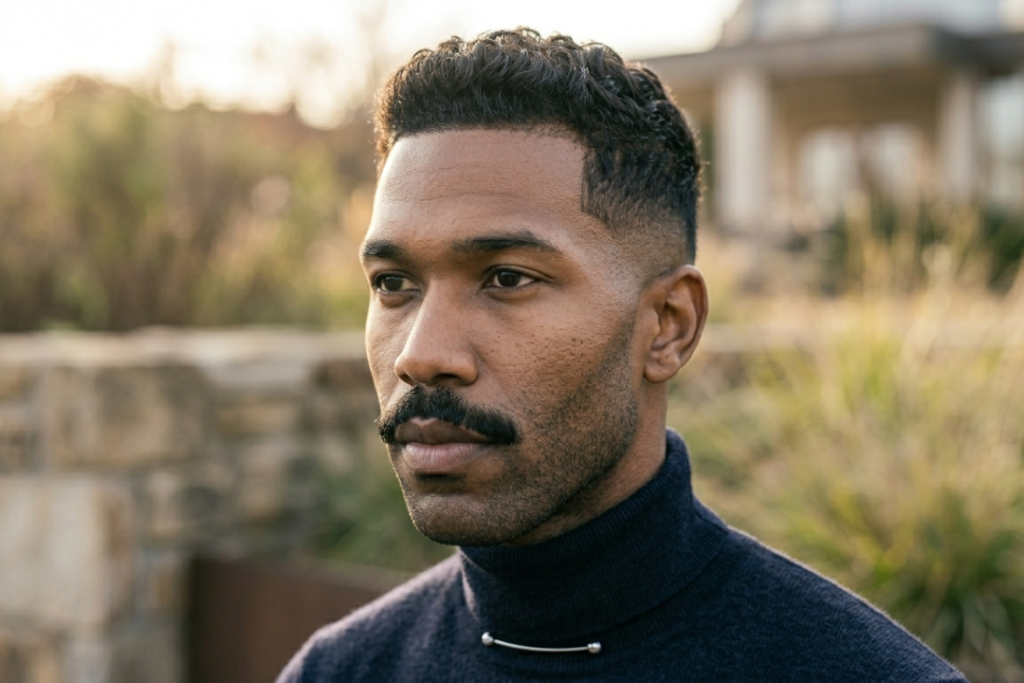
Beardstache
Thick mustache, short even stubble across the rest of the face. The stubble stays close to the skin so the mustache stays the main feature. Great for guys whose beard grows patchy — at stubble length it barely shows. Easy to maintain, works for weekends and nights out equally well.
Horseshoe Mustache
Two strips extend down from the mustache corners in an upside-down U. Bold, makes a statement. Best on square or angular faces with a strong jaw. The tight sides of the fade keep it from going overboard. Not everyday, but on the right side it hits hard.
Which Combo Suits Your Face Shape
- Round face — go chevron. It adds definition near the upper lip and helps balance the roundness. Skip the horseshoe, it will make the face look wider.
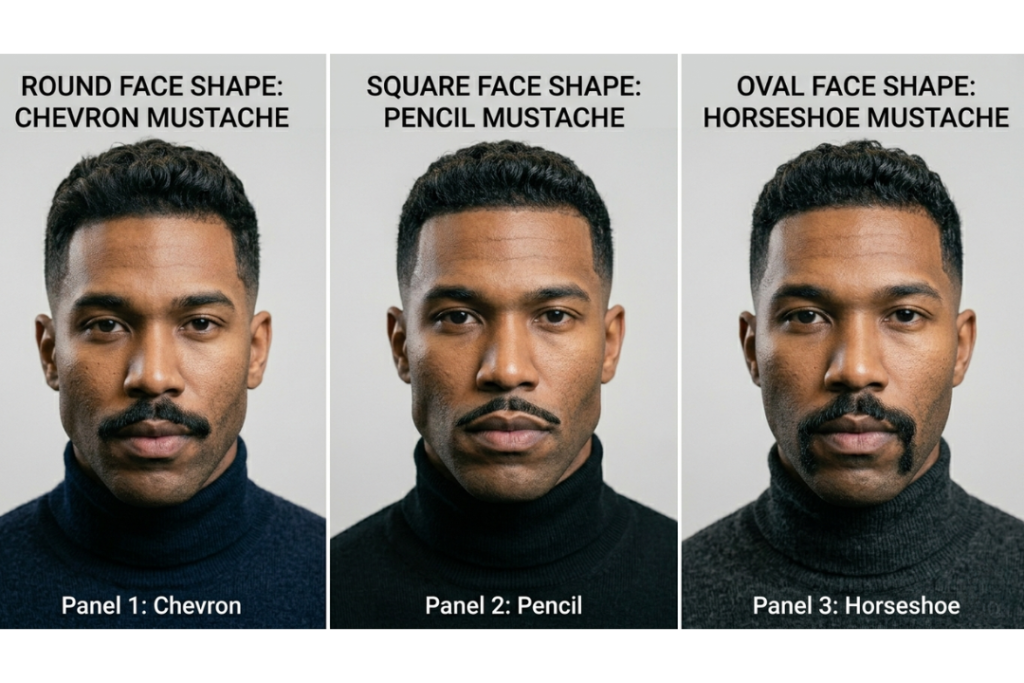
- Square face — most options work. Chevron, beardstache, horseshoe all hold up against a strong jaw without looking overdone.
- Oval face — almost everything works. Start with a natural mustache if you don’t know what to choose.
How to Tell Your Barber What You Want
Most guys walk in, say something vague and walk out with something almost right. Being specific takes thirty seconds.
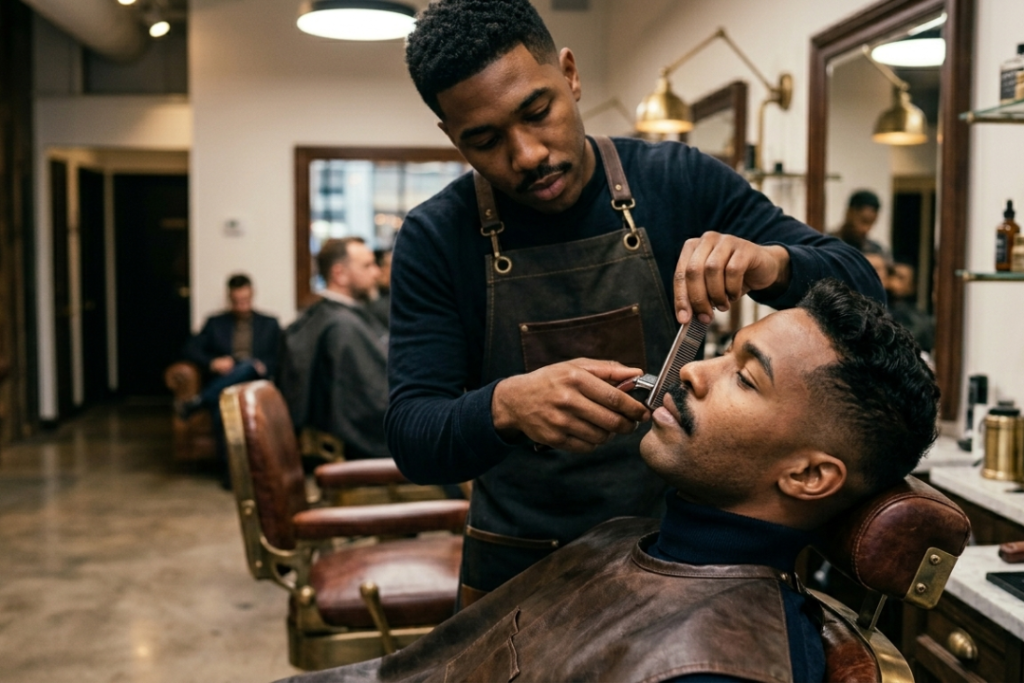
Say this: “Low taper fade — start it just above my ears, bring it clean down to the neckline. Keep the top at [your preferred length]. Shape my mustache into a [chevron / pencil / horseshoe].”
Bring a photo. One clear reference picture removes all the guesswork and lets your barber flag anything that needs adjusting for your hair type or face shape.
Simple Daily Grooming Routine
- Every morning: Comb the mustache flat, apply a little wax if you need the shape to hold through the day.
- Every 3 days: Check the edges. Trim anything creeping over the lip or going uneven on the sides. Two minutes once you are used to it.
- Every week: Proper trim to keep the length in check. Always trim dry — wet hair looks longer and you will cut more than you meant to.
- For the fade: Book your barber every 2 to 3 weeks. The moment you think it can last a bit longer is usually exactly when you should book.
Wrapping It Up
A low taper fade already looks good on its own. A well-kept mustache alongside it makes it a complete look — pulled together without looking like you tried too hard.
Start with the classic or the chevron if you are new to this. Build the routine, get comfortable, then experiment from there. The guys who consistently look sharp are not always getting the most expensive cuts. They are just paying attention to the details. A mustache that actually matches your fade is one of those details.
FAQ’s
Does a mustache actually look good with a low taper fade?
Yes — and it is genuinely underrated. The fade brings attention to your face and the mustache gives that attention a focal point.
What is the easiest mustache to maintain with a fade?
Classic or chevron. Light trim once or twice a week, daily comb. No complicated shaping.
How often should I trim my mustache?
Every five to seven days for most guys. Fast growers can do a light cleanup every three to four days.
Can guys with curly hair pull this off?
Absolutely. The fade actually lets the texture on top stand out more. Add a chevron or natural mustache and you have a full, textured look with real character.
Which face shape works best?
Oval and square carry it most naturally. But with the right mustache choice, any face shape makes this combo work.